|
|
|
Gorman-Redlich CAP-to-EAS Decoder System

|
|
Additional Images
Pricelist
Features
Specifications
Product Documents
FAQ/Troubleshooting
Additional Info
|
|
|
CLICK HERE to sign up for Gorman Redlich
Common Alerting Protocol (CAP) update emails.
|
|
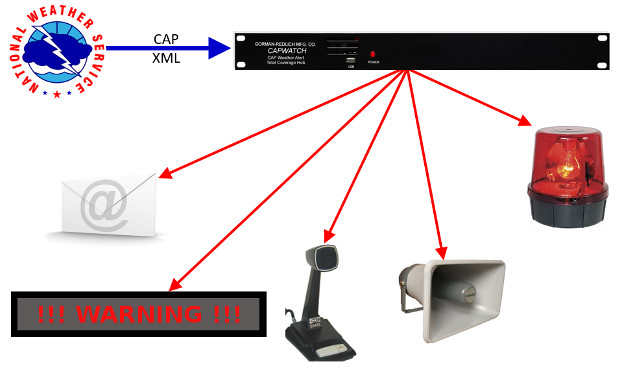
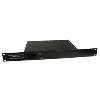
The emergency alerting experts at Gorman-Redlich have the answer in the form of the Gorman-Redlich CAP-DEC1 CAP-to-EAS converter unit.
This standalone unit translates received CAP alerts into EAS headers, which will be transmitted by your current EAS equipment. The
CAP-DEC1 unit is classified by the FCC as an intermediary CAP device and can function as either a universal intermediary device
(outputting AFSK data tones which can be used as an input to any certified encoder/decoder) or as a component intermediary device
(communicating with the Gorman-Redlich line of EAS encoder/decoders via RS232 data). For those who wish to upgrade their current EAS encoder/decoder units as well as conform to the FCC mandate, development is underway on a combination EAS encoder/decoder/CAP-to-EAS
converter unit.
|
The Gorman-Redlich CAP-DEC1 CAP-to-EAS unit has passed the Integrated Public Alert and Warning System Conformity Assessment (IPAWS-CA)
testing at the FEMA-contracted SAIC lab in Somerset, Kentucky. More details are available in the
FEMA Responder Knowledge Base (RKB).
|
Already have a CAP-DEC system? Click Here for software update information
|
|
|
The 2015 Myth
An interpretation of the FCC's Fifth R&O regarding CAP "enhanced text" has sparked rumors that CAP intermediary devices
will be rendered inoperable after June 30, 2015. The 5th R&O states that intermediary devices must be capable of
outputting enhanced text generated from the CAP message. The Gorman-Redlich CAP-DEC1 currently generates this "enhanced text" and
displays it on the user interface (in addition to the unit's capability to render this text as speech). It is a simple matter to
output this enhanced text to a character generator in the same manner as current (and future) EAS units output the standard text
crawl to character generators. We anticipate the addition of this feature to come well in advance of any such deadline. For more
information, please see the Understanding CAP Converters article. |
|
|
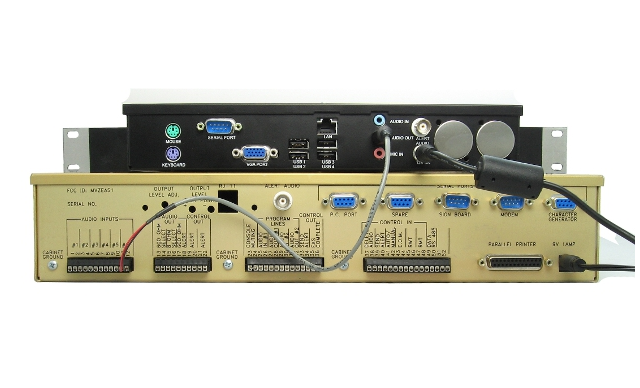
Simple connection of CAP-DEC1 to an EAS unit.
Connection requires only a single audio cable (available in 1' and 5' lenghts)
connected to any audio input port on the EAS encoder-decoder of any manufacturer.
|
FEATURES
Built by the experts with 35 years of experience in the emergency alerting industry, the CAP-DEC1 offers the following features:
|
RJ45 Ethernet LAN connection for network/internet receipt of CAP alerts.
RS232 Serial connectivity with Gorman-Redlich EAS units for fast alert transmission of CAP-to-EAS translated alerts.
Remote access via optional VNC interface (not included by default).
Frequency Shift Keyed (FSK) output of CAP-to-EAS translated alerts for compatibility with a wide range of legacy EAS equipment.
Monitors up to three (3) CAP alert server URLs (expandable for additional monitoring).
Internal logging of CAP-to-EAS translation activity.
Internal storage of received CAP alerts and attached audio files.
Ability to log activity to USB or network printer.
Ability to send activity logs via built-in email server (no external server configuration required).
Simple to connect, easy to use. Only three connections required for operation.
Easy configuration and monitoring using a PS2 or USB keyboard and mouse and VGA monitor or by optional VNC or KVM switch interface (not included).
Text-to-speech converter to generate alert audio if no attached audio is present with the received CAP alert.
Standalone unit; does not require purchase of new encoder-decoder
Software updates via LAN or USB
One rack unit space requirement for small equipment footprint
|
TECHNICAL SPECIFICATIONS
The CAP-DEC1 helps you meet the CAP requirement using the latest technology:
|
CAP 1.2 compatible
Powerful 1.6GHz dual core Intel Atom 330 processor
1GB of RAM
80GB on-board storage for log files and message/audio archives (upgradable to higher capacities)
100+ year MTBF mobile-engineered storage for cool, quiet, reliable, shock-resistant performance
10/100/1000 Gigabit LAN connection for fast network connectivity
Five (5) USB ports for attaching printers, storage devices, network adapters, etc.
RS232 serial port for data transfer
Built-in text-to-speech converter
Built-in SMTP server
Automatically updates and synchronizes clock via preconfigured NTP servers
Built-in firewall for network security
Polls RSS feeds and DM/IPAWS-OPEN servers to receive CAP alerts
Codecs for decoding and playing attached MP3 alert audio
1/8" TRS jacks for audio in, audio out, and microphone in
FCC ID: MVZCAP-DEC1
|
|
Additional Information |
CLICK HERE for information about about the FEMA IPAWS alert aggregator feed
Beginning December 12, 2011, Required Weekly Tests (RWTs) will be available via the FEMA IPAWS alert aggregator feed.
|
|
 |
Text-to-Speech is a "Go"
In their Fifth R&O, the FCC has deferred the decision on whether to allow the use of text-to-speech (TTS) technology at CAP end points (i.e. EAS
participant locations) to a later date. On April 19, 2012, the FCC released their
review of the TTS issue, which contains the following summation of their current stance:
"With these revisions, we hereby defer consideration of the ECIG Implementation Guide's adoption of TTS software
configured in EAS equipment to generate the audio portion of an EAS message, and thus neither require nor prohibit EAS
Participants from following the ECIG Implementation Guide's specifications on use of TTS."
|
|
|